How to Train Dogs Through Play and Connection
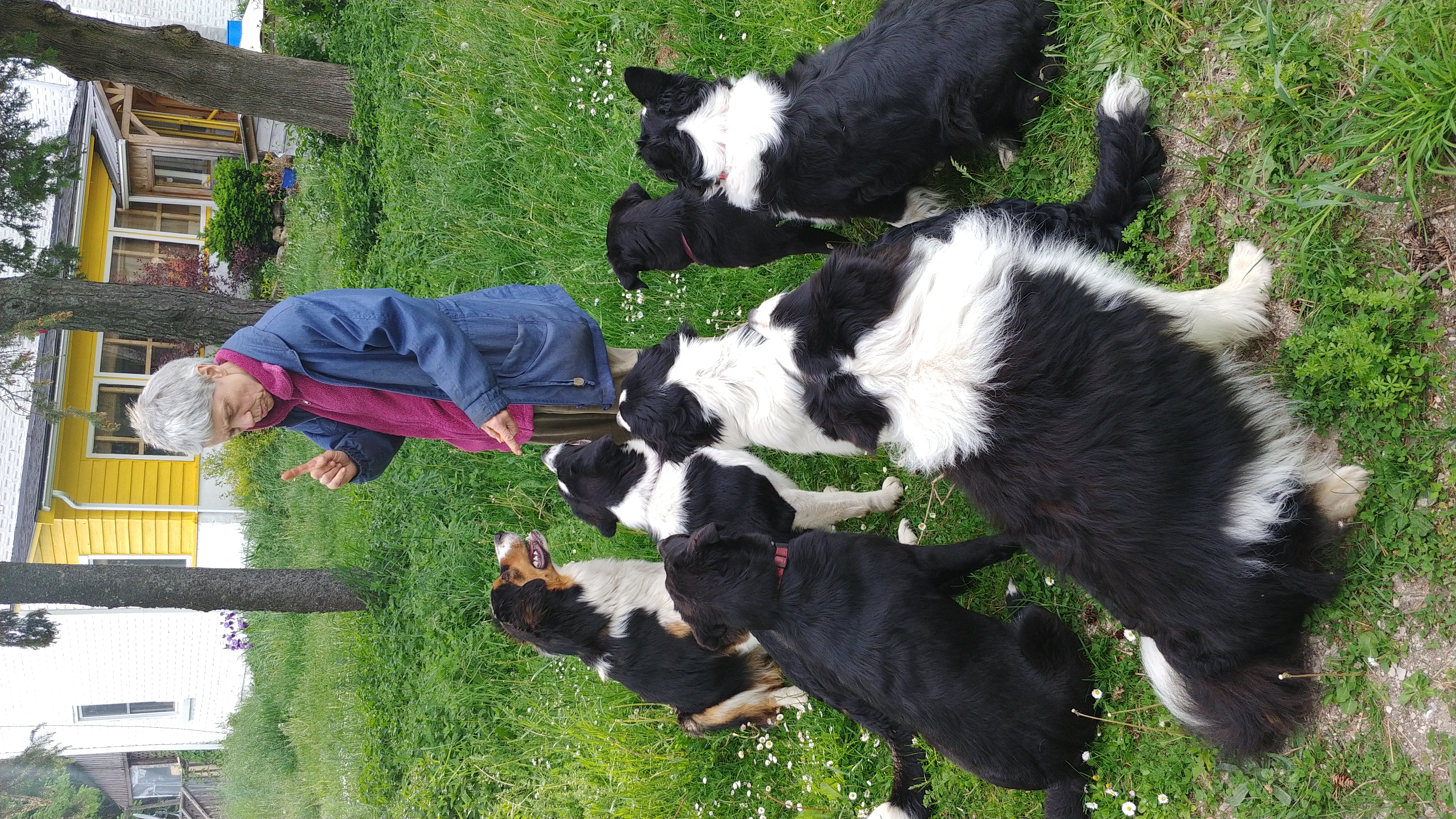
Effective dog training doesn't come from control, it comes from engagement and understanding. This philosophy aligns with trainers like Susan Garrett, who emphasizes that learning should feel like a game. In her work, she highlights that fun and engagement are essential for building enthusiasm and focus in dogs. If we want dogs to listen, we must first become interesting to them. As soon as puppies start to play and show interest in me, I condition them to associate training with fun. With that in mind, here is a breakdown of my training methods and the thinking behind them.
Teaching “Sit”
“Sit” is often the first trick taught because it's simple and sets the tone for communication. By guiding a treat slightly upwards and back in front of the dog's nose, you create a natural shift in balance that leads to sitting. I hold the treat between my thumb and middle finger, and have my pointer finger up, leaning forward a bit to guide the treat in front of their mouths so that they sit.
What matters most here is clarity and repetition without pressure. The dog isn't learning the word immediately, they're learning a predictable pattern. Follow the hand, perform the action, and receive a reward. Add the verbal cue only after consistency and when the dog finally understands the action.
This builds confidence. The dog begins to think, “I can figure this out.” That mindset is the foundation of all future learning.
Teaching “Down”
The transition to “down” often reveals how precise training must be. Starting from a sit, the treat is guided downward, but crucially, close to the dog's body. Slowly move the treat downwards toward the ground away from their nose, which encourages them to follow it and lay down.
This is where many owners get frustrated, but the issue isn't with the dog, it's with the humans' communication. Dogs follow physical cues far more than words, so it is important for your movement to guide them first.
Following & Engagement
Walking exercises that encourage a dog to follow you, such as holding a treat near your leg, aren't about strict obedience, but about building a connection.
When you occasionally stop or change direction, the dog learns to pay attention because it's rewarding and dynamic. Sessions should be short and timed well, as dogs learn best when they are alert, but not overstimulated.
This reflects a key principle: engagement first, precision later.
Blanket Training
Using a blanket introduces the idea of “place” in a playful way. By tossing a treat with a cue like “search,” the dog engages in movement. Returning to the blanket and receiving a reward builds a strong association: this space is safe and rewarding.
Over time, you can shape more behaviors on the blanket, such as “sit” or “down”. This layered approach mirrors how dogs naturally learn: through repetition and positive outcomes, not commands alone.
Importance of Eye Contact
Holding a treat and waiting for eye contact teaches something powerful, that focus leads to a prize. At first, the dog may paw or nudge, but eventually they look at you, and that moment is marked and rewarded. I would start by holding out a treat in my open palm, and wait for the dog to make eye contact. If they approach the treat without looking at me, I close my hand. Only when the dog looks at me, I would reward them with the treat. Use a clicker to reinforce the action of eye contact.
This creates a habit where the dog checks in before acting. Instead of reacting impulsively, they make eye contact with you and begin to ask, “What do you want?” This is the beginning of real communication and trust.
Silent Observation
When a dog behaves in a way you don't like, scolding them or constant talking can create confusion. Instead, stand still and watch them, calmly and seriously.
Dogs are often highly aware of attention. This quiet pressure often encourages them to adjust behavior on their own. It requires patience, but it avoids overwhelming the dog with mixed signals. When they start acting in an appropriate manner, use a reassuring word like “okay” so they understand their behaviour is now correct.
Following You While Changing Directions
When a dog runs ahead of you, turning and walking in the opposite direction teaches a simple but powerful lesson. Stay aware of where your human is. The dog will often look back to see where you are and will reunite with you. When they realize they can lose you, they will want to stay closer to you. You can also hold a treat near your leg to encourage them to stay by your side.
Rather than relying on restraint, the dog learns that connection matters. Over time, they naturally stay closer, not because they're forced to, but because they choose to.
“Place” Training
Telling a dog “go to your place” means nothing unless it's taught physically first. You must guide the dog to the desired spot, and praise them. Sit with them a bit to get them accustomed to the area. Take a few steps away from them, and reward them for staying in the same spot. You can then start to extend the distance and time you are away. Leave them for ten, thirty seconds, then a minute. Go back to reward them for staying.
Dogs don't understand language, they understand experiences repeated consistently.
Conclusion
Effective training is about setting dogs up to succeed with physical exercises. When we align our communication with movement, timing, and reward, we limit confusion.
As Susan Garrett mentions in her training philosophy, incorporating games and enjoyment into learning creates dogs who are not only well-behaved, but eager and enthusiastic to participate.
If we talk to people and they don't understand, we try to explain something to them in multiple ways until they understand you. The same case applies to dogs. If your dog isn't responding, try simplifying your approach. Make it clearer, easier, and above all, fun.